Search Results for perspective-driven pose
Explore AI generated designs, images, art and prompts by top community artists and designers.
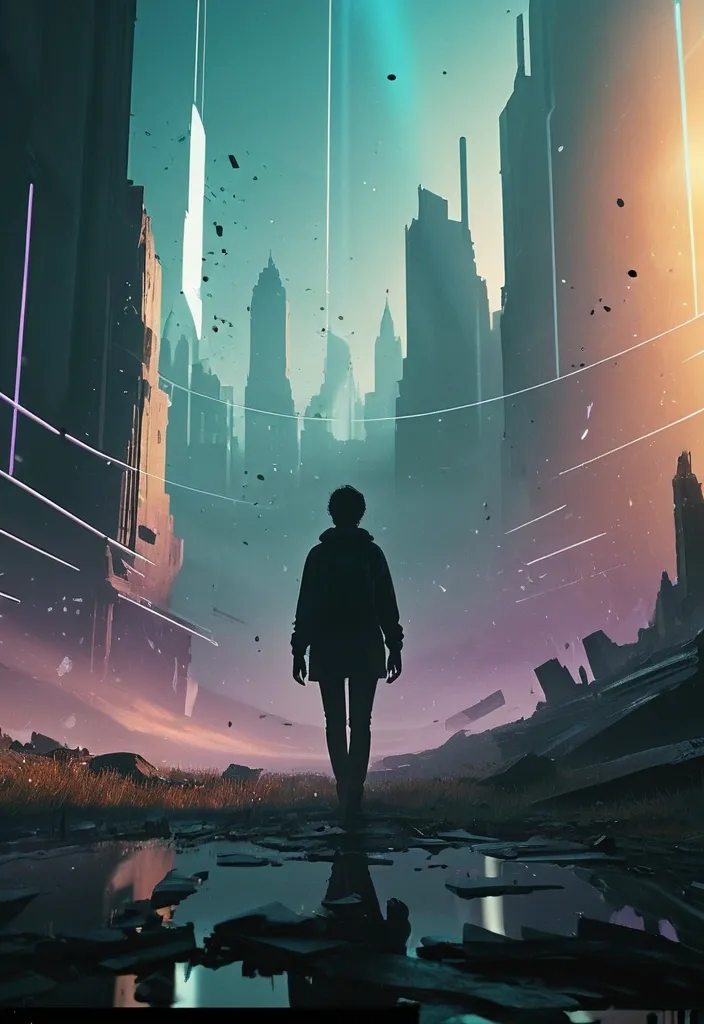

Design a high-end cinematic character poster in a layered depth composition (9:16 vertical) with a strong foreground–midground–background separation instead of silhouette framing. The character stands slightly off-center in a dynamic , perspective-driven pose , interacting naturally with the environment (wind , light , particles , fabric movement). The camera angle should feel intentional—low-angle for power or slight tilt for tension—creating a sense of motion and presence. The background should not be contained inside shapes. Instead , build a living world around the character: atmospheric environments (fog , city lights , ruins , nature , etc.) light rays , volumetric glow , drifting particles subtle storytelling elements placed naturally in space (not collage-based) Introduce floating fragments or layered planes (glass shards , light panels , memories , holographic slices , or torn paper edges) that orbit or intersect the scene , each containing faint symbolic visuals tied to the character’s story—keep them minimal and elegant , not cluttered. Lighting should be cinematic and directional: strong key light shaping the subject rim lighting to separate from background soft gradients and shadow falloff for depth Color palette should follow a controlled dual-tone system (e.g. , teal–orange , violet–gold , crimson–black) with smooth transitions and no oversaturation. Typography: place the title in a clean , modern cinematic layout integrate text subtly into the environment (ground plane , light projection , or floating UI style) avoid heavy or oversized typography Overall style: ultra-realistic + cinematic editorial , sharp detail on subject , soft atmospheric depth in background , minimal but intentional storytelling elements , premium movie-poster quality. Avoid: silhouette fill compositions , heavy collage density , watercolor textures , or ink-wash edges. Focus on spatial depth , realism , and cinematic immersion. ,